
17 Jan Down by the river
Down by the river
Turbulent days for Margaret & William

Farming is a constant struggle. Physically taxing and a strain financially.
Margaret decided to get a job in town, just three days a week.
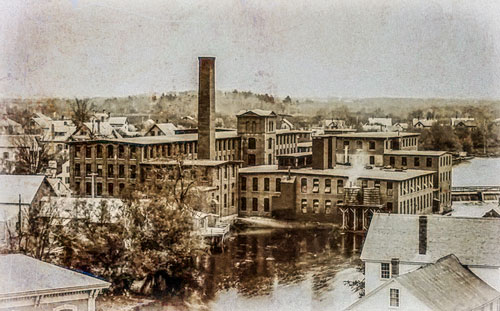
She left before the sun was up, following the road down to the millinery shop (hat maker) beside the river.
Inside, the air was always warm and wet. Rabbit and beaver pelts, compressed and stacked like soft blankets. She learned the work quickly: soak the fur in the carroting solution, a cloudy bath that smelled sharp and metallic; press it, stretch it, steam it until the loose hair locked together into felt.
She would take the felt to the moulds and press them into hat shapes, the most rewarding part of her day. The steam rose in white clouds, curling around her face, dampening her hair. It tasted faintly bitter and metallic.
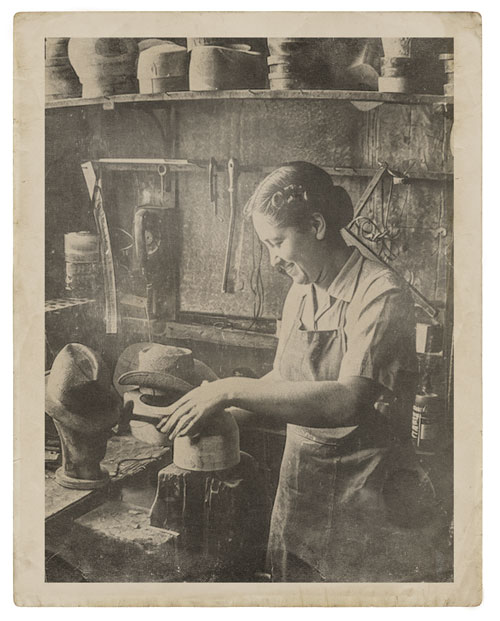
Margaret at the Milliner Factory – shaping and prepping hat moulds for production
When Margaret came home, she washed her hands, scrubbing away the faint stain the carroting solution left behind.
She sometimes complained that her thoughts felt rearranged, and that her head throbbed and ached. This went on for a few years. William noticed that she sometimes paused mid-sentence, searching for a word that used to come easily to her.
“It’s nothing,” she said, smiling. “Just tired.”
The days were long for William too, the whole day in the orchard, then late nights in the Bakery. He did enjoy the honest work: seed to tree, blossom to fruit. Fruit to pie.
His pies sold well. He would put his photography in the box: a little surprise inside each one that the people enjoyed.
As he worked in the orchard, he could see the Milliner factory by the river, steam puffing from its chimneys, and his beloved Margaret faintly seen eating by the river on her lunch break. He would always wave, even though she could never see him.
The first vision came after her second year of working. She stood in the orchard one evening, staring up at the sky with a look of careful attention, as though listening.
“There’s a hat up there,” she said.
William laughed softly. “A hat?”
“A bowler,” she said, precise. “Big as a house. Floating.”
He stepped beside her. The sky was clear and empty, just the last pink streaks of sunset.
“And on its crown,” she added, lowering her voice, “there’s an eye. It’s looking down, William. Watching.”
Her hands trembled. William put an arm around her and told her it had been a long day. She leaned into him, reassured, and the vision passed.
As the year went on, she began to forget the names of neighbours she had known all her life. Some mornings she sat on the edge of the bed, unable to remember whether she was to be at the millinery or the orchard.
Depression settled over her heavily. On good days, she worked, laughed, and teased William about his crooked pruning. On bad days, she barely spoke.
One afternoon, she ran into the farmhouse, breathless, full of fear. “They’re floating,” she said, pointing outside. “The apples. Look at them!”
William shaded his eyes. The trees were heavy with fruit, but nothing had left the earth.
“They’re as big as houses,” she insisted. “Haunting green orbs overhead. Hanging in the air like they’ve forgotten how to fall.”
William didn’t know what to say. “Should I get the camera?” he asked gently.
“Yes,” she said, relief flooding her face. “Please. This time you’ll see.”
He fetched it and waited while she described the impossible situation. He saw only trees and sky.
The worst vision came near the forest’s edge the following day.
She stopped suddenly, gripping his arm. “Don’t move,” she whispered. “It’s watching.”
She described a towering, rectangular wooden column, 11 feet tall, floating slightly above the ground. Near the top of its torso, a narrow horizontal slit, feeling like an eye.
“It sees me when I work,” she said. “In the orchard. In the shop. Then it’s gone.”
William didn’t see it. He said nothing, he just embraced her.
Sometimes, at dusk, she spoke of deer stepping through glowing doorways along the forest edge. “They’re not afraid,” she said. “They know something we don’t.”
William listened and kept the camera close.
Margaret refused to see a doctor until she began to forget William’s name. The doctor asked about her work, nodded gravely, and said, “Mad Hatter’s Disease. Mercury poisoning,” he explained. “The vapours… years of breathing what should never have been breathed.”
Margaret no longer worked at the millinery. She sat with William beneath the trees, sometimes quiet, sometimes filled with stories of things he could not see. William held her hand and listened, trying to imagine what world she was seeing. Let her know he was there with her, and loved her even as her mind drifted just beyond reach.
~CJ~
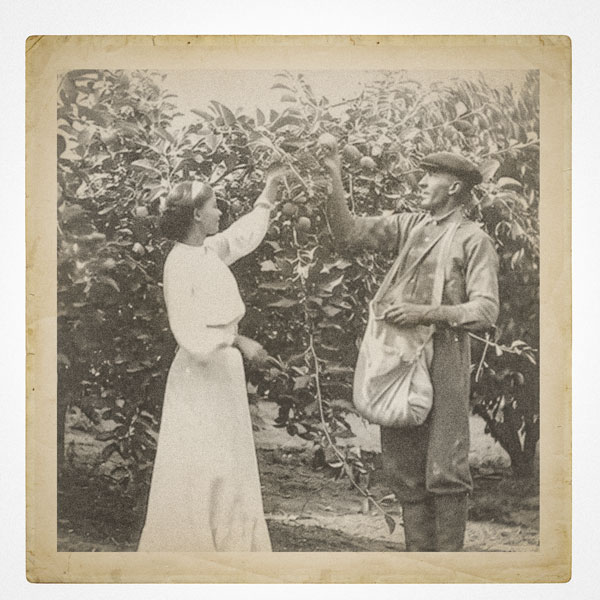
Margaret & William – a year after being married, tending to the orchard.