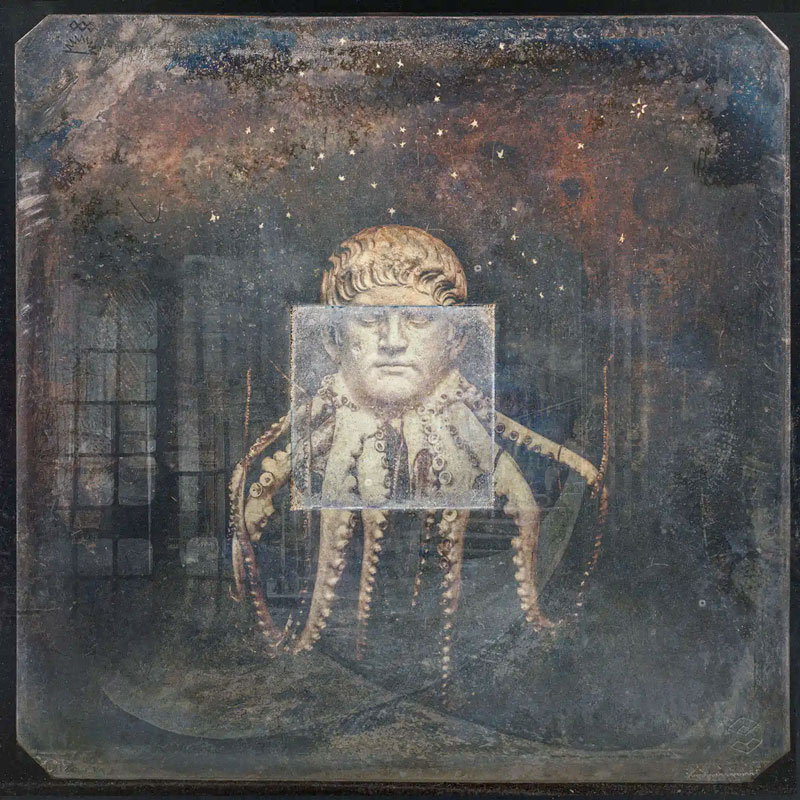
22 Mar Artwork: Octo nrw qsr
Jungian psychology suggests that the collective unconscious is a shared reservoir of experiences and archetypes common to all humanity.
Greed, as an archetypal element, resides deep within the “shadow”—the darker side of human nature.
The pursuit of wealth and power often undermines ethical considerations and the well-being of the community. It leads to moral decay and crises of power, impacting not only personal relationships but also broader societal structures.
The Roman Empire provides compelling examples of this, particularly with Emperor Nero (54-68 AD), who is remembered for his self-indulgence and tyrannical personality. His darker side, disconnecting him from the moral values of governance, illustrates how unchecked greed can evoke evil.
In this context, the influence of greed extends outward from the individual, like tentacles, reinforcing archetypes that manifest as a collective phenomenon across the ages.
NRW QSR
The term “nrw qsr” is the Hebrew transliteration of “Nero Caesar” from Latin.
In Hebrew, each letter also corresponds to a numerical value: the first ten letters represent the numbers 1 to 10, the next nine letters count in increments of ten, and the remaining letters represent hundreds.
When “nrw qsr” is converted to its numerical value, it results in the number 616. However, different spellings of the name Nero Caesar in Hebrew can yield the number 666.
Many scholars and theologians believe that the “beast” mentioned in Revelation refers to the Roman Emperor Nero, who persecuted Christians. It is said that his name is encoded in the text using this numerical system.
Revelation 13:18 states that the number of the beast is “the number of a man,” which is 666. This number may represent the calculation of the values of the Hebrew letters associated with Nero.