

30 Jul Creativity: Aquila Vas Cavum Apidomus
A CREATIVE FICTION:
by Christian Joore
In the late 1960s, a rare discovery of a beehive over 3,000 years old was found in an Inca Tomb in northern Peru.
A Dutch-American archaeologist named Dr. Jacobus Nies, along with his wife Margreet, are attributed with the discovery.
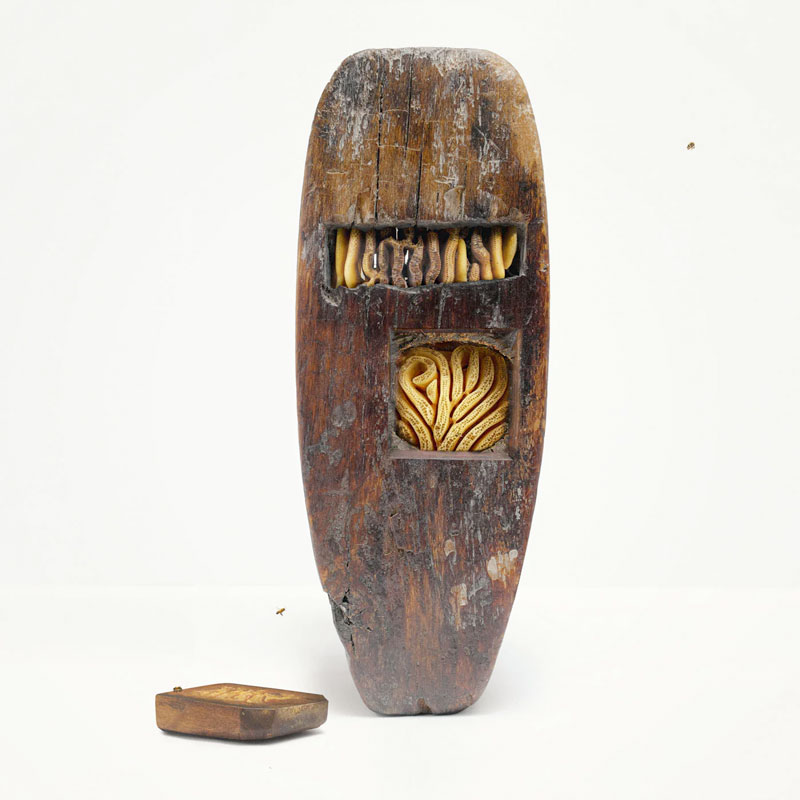
The ‘hive’ is actually an organism unto itself—one with a hollow interior that allows honeybees to enter and build their combs.
This symbiotic relationship is extremely unique in the world of biology, occurring only during the time of the Chavin Civilization, roughly 1500 BC.
Using zoological Nomenclature, the name “Aquila Vas Cavum Apidomus” was given to the genus of living Hives by its discoverer, Dr. Jacobus Nies, in 1972.
– Aquila: “eagle”
– Vas: “vessel”
– Cavum: “hollow”
– Apidomus: “apis” (bee) and “domus” (home or dwelling), meaning “bee home.”
This photograph, taken by Dr. Neis, shows a cutaway section of the hive, revealing the combs, which interestingly display a heart-shaped configuration on its left side.
“Spring Dance”
In the northern foothills of the Andes, two Peruvian girls dance to celebrate the arrival of spring. The rhythmic sounds of their footsteps attract the ‘Flotante Hives’ from the Amazon Basin.
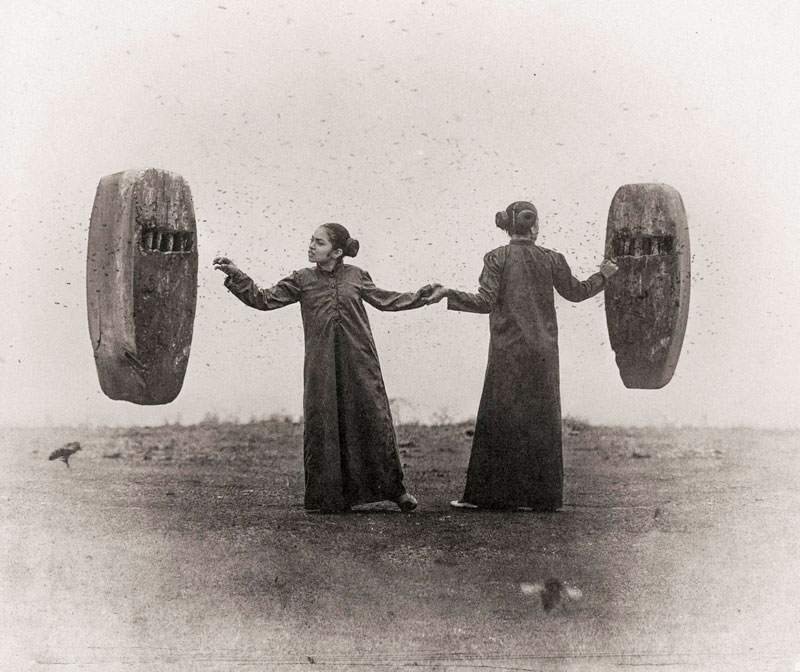
These Hives are living organisms of an unknown genus; they grow, adapt, and maintain homeostasis, but are unlike any organism we are familiar with.
Twice a year, the Hives migrate over the Andes and down to the Pacific Ocean. This journey is challenging due to the extremely cold temperatures at the mountain summits. The Hives bring the bees and their wax combs inside them as a source of heat and insulation for the trip.
The bees benefit from the Hives as well, primarily for protection, but also from the various pollinator habitats that the Hives move through during their migration to the ocean.
The Chavin civilization of Peru has recorded these migrations as far back as 1500 BC and has developed the “Spring Dance” in honour of this event, emphasizing the harmony between all living things on the planet.

Trish’s grandmother is Margreet Nies. She is a retired beekeeper—a kindly woman of Dutch origin with a deep passion for gardening.
Her late husband, Jacobus ‘Koos’ Nies, was an archaeologist who specialized in ancient Inca culture. He discovered beehives buried within tombs at the Pacopampa site in northern Peru.
These discoveries ignited Margreet’s curiosity about how Hive design affects bee colonies and their health.
She went on to develop and refine various hive structures based on Inca designs, which improved both bee welfare and honey production.
And now, even in retirement, her legacy continues to inspire those who recognize the vital role that bees play in our ecosystem.