

06 Aug The melody of Noema
The melody of noema

The character of our subjective experience is influenced by how we think. Obviously.
When we engage with something, we are not encountering the object directly but rather the idea of it shaped by our perceptions.
The culmination of our senses, emotions, memories, and culture influences and guides our perceptions.
This is most evident in art.
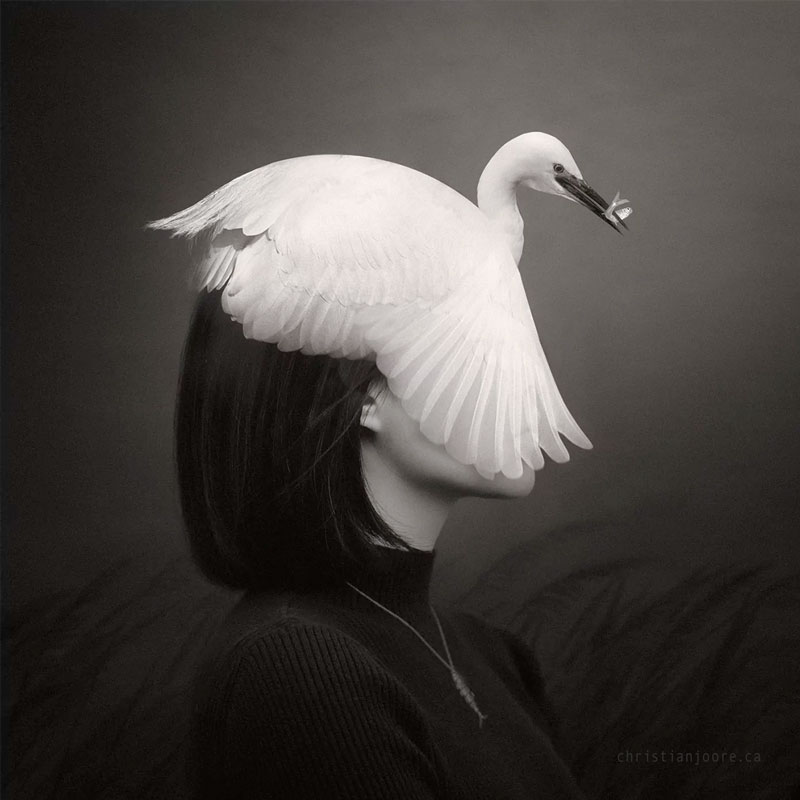
Art is never just ‘art’, but rises in the reflection of our mind and the personal significance we attribute to it.
In Phenomenology, the subjective act of seeing is called Noesis; this is the ‘how’ of conscious experience. While Noema is the meaning, the ‘what’ that is being experienced.
If someone doesn’t understand what a piece of art means, it’s an indication that the observer lacks an approach towards the content. Their connections between Noesis and Noema are undeveloped, lacking ways to understand and interpret.
Noesis – the act of consciousness. To perceive, the judge, to desire, to think.
Noema – the meaning inside experience. What is seen, what is judged, what is desired, what is perceived.
I see the fish (Noesis), the sight of it appears inside my experience (Noema).
I eat the fish (Noesis), the flavour of it appears inside my experience (Noema).
I feel the Egret (Noesis) upon my head, eating the fish; I imagine its natural survival instinct (Noema).
I can identify the unification of noetic acts (the connection between Noesis and Noema) through internal reflection by examining my own conscious experience of something.
But I will never know the Egret and its experience of eating fish. My eyes are not its eyes; I can only hold a semblance of what it is atop my head and hang its experience around my neck as a symbol.
~CJ~