

16 Feb The No Wonderland Man
The No Wonderland Man

The ‘on-the-nose’ Alice in Wonderland archetypes are unmistakable… and risky.
The artwork does nothing to subvert or obscure the obvious reference. Instead, it stages it quite literally, which quickly leads to something straightforward and superficial.
Is this Wonderland facade too blatant?
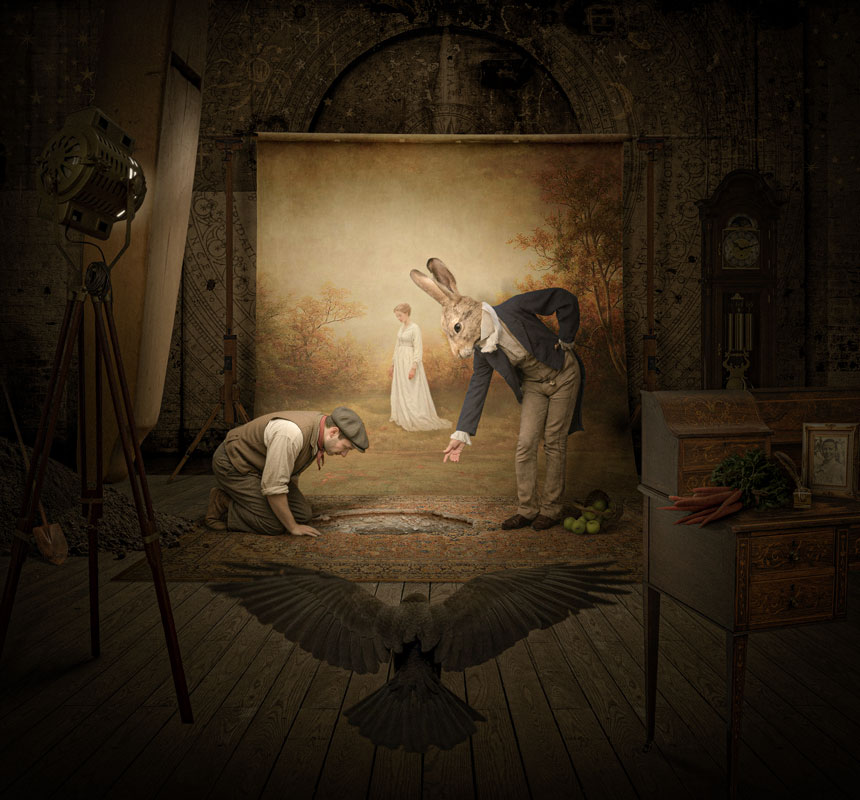
The artwork doesn’t entirely disappear into Lewis Carroll’s whimsy, though. There are subtler elements built into the framework that invite something else.
A keen eye may discover it. A richer, more melancholic narrative: one of longing, loss, and an attempt to bridge worlds.
These details transform the scene into a poignant allegory for separation, perhaps between lovers or the living and the dead, with the “rabbit hole” reimagined as a desperate portal to reunion.
Let’s unpack this:
The Rabbit-man’s pointing hand and the kneeling figure introduce vulnerability and introspection. The man is searching, on his hands and knees, grief-stricken. This humanizes the scene, shifting it from adventure to personal quest.
Thus, we have a new protagonist, one who is more grounded, perhaps heartbroken. His gaze into the abyss suggests not whimsical curiosity but a yearning to retrieve something lost.
It implies the hole isn’t just a ‘Wonderland-style’ entry to fall into, but a chasm to be contemplated.
One small, pivotal detail transforms the scene: a framed photo of a woman perched on the wooden desk beside the carrots. The portrait feels intimate, like a memorial. It’s not part of any painted fantasy; it’s a real-world artifact, inside the studio, suggesting a personal connection.
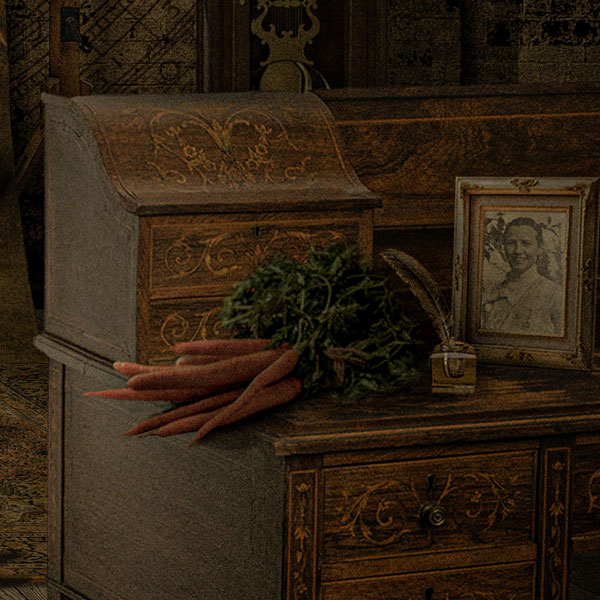
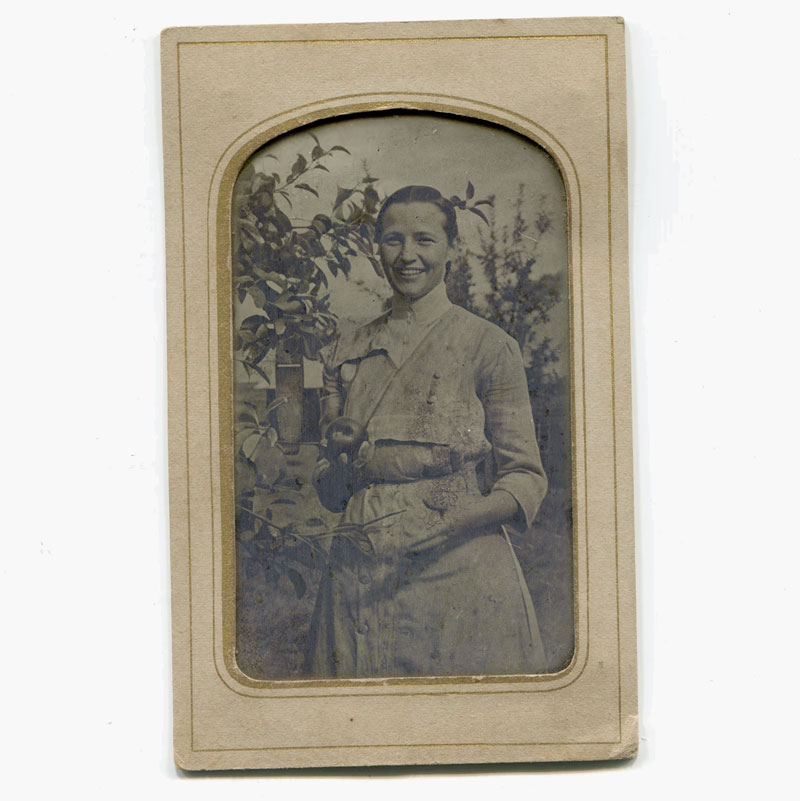
This could represent a loved one, perhaps the woman in the backdrop, painted as an idealized memory or apparition of her.
Regardless, the separation is palpable: she’s trapped in an illusory painting, distant and untouchable. The “real space” of the photograph underscores her absence. And so, the desk becomes a shrine to her.
Adjacent to the picture frame, a quill and an inkwell. These are not mere props but imply unfinished business; letters unsent, stories untold, or pleas unanswered.
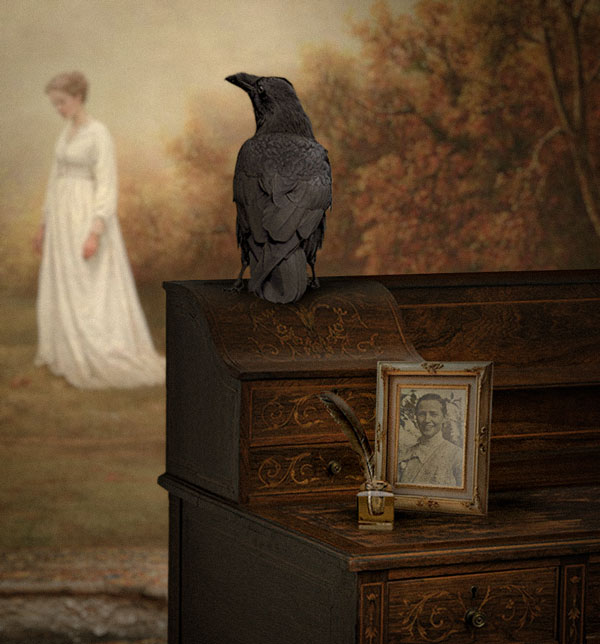
In a Victorian context, quills and ink symbolize romantic communication, often across distances. This suggests they’ve been separated, either by death, distance, or fate. The quill represents attempts to reach across that divide. The man isn’t just falling down a rabbit hole; he’s digging for a way to correspond with the unreachable.
In the immediate foreground, the Raven flying towards the hole ties everything together. In literature and mythology, ravens are omens of death, messengers between worlds, or harbingers of loss.
In Edgar Allan Poe’s “The Raven,” the bird torments a grieving lover with its refrain of “Nevermore.” Perhaps then, in contrast, this Raven means to pierce the veil between life and death as a guide for the kneeling man.
With the Raven swooping into the scene, it could be showing the way to the afterlife. Here, the Raven becomes the intermediary: not a whimsical Wonderland creature, but a sombre escort for souls. Its placement along the same foreground plane as the desk, quill, and photo reinforces this.
Special note:
In Lewis Carroll’s Alice in Wonderland, the Mad Hatter utters a famous nonsensical riddle: “Why is a raven like a writing desk?”
My answer is: “Because they both have inky quills.”
The studio setting is a space of creation and illusion, where the painted backdrop represents the illusion and the hole represents the creation of opportunity in this realm.
The hole opens to resurrection, adding emotional weight to the scene, turning the “on-the-nose” archetypes into a foundation for something more universal: the human impulse to chase the departed, using art, writing, and symbolism as bridges.
This elevates the piece from clever illustration to a meditation on grief and the limits of imagination.
To conclude:
The artwork is a riddle unto itself: a confluence of Lewis Carroll’s ‘Writing Desk’ question, Wonderland motifs, and reframed archetypes. Meant to create a bridge between surface-level surrealism and a deeply revealed melancholy.
~CJ~